
The complex position occupied by King Umberto I di Savoia in Italian history is punctuated by attempts on his life, only the third of which was successful. Gaetano Bresci was the last of the three “anarchists” who set out to kill a man whose repressive policies had long impinged on the working classes, and whose conservatism grew stronger as he aged. In his trial, Bresci made clear that to his mind he had not killed Umberto I but the king, the principle of kingship.
The symbolism surrounding such figures is always complex and I have no intent to engage with that exhaustively here. Instead I want to take a look at piece of modern epigraphy from Matera (in Piazza Vittorio Veneto, near the Fontana Ferdinandea). As the title of this post suggests, there is an interesting element of Homeric reception at work here–as well as a broader background of classical material that is repurposed for this piece of very calculated political messaging.

TRANSCRIPTION
A
UMBERTO I DI SAVOIA
come l’omerico modello di principe
“due cose insieme: re buono e prode guerriero”
dall’empia ferocia anarchica
crudelmente rapito alla nazione
cui più che sovrano fu tenero padre
la gioventù studiosa di Matera
col generoso concorso d’ogni ordine di cittadini
consacra questo ricordo
Il XX Settembre MCMII
TRANSLATION
To
UMBERTO I OF SAVOIA
[who was] like the Homeric model of a prince
“Two things at once: a good king and valorous soldier”
By the impious anarchic beastliness
Cruelly stolen from the nation
Of which he was more a tender father than a sovereign
The student youth of Matera
With the help of citizens of every class
consecrate this memorial
On September 20th 1902
There is not the space here to attempt a full contextualization, but lets focus on two literary observations. I hope these thoughts might make of this plaque a miniature object lesso. This document is a a little puzzling but it can occasion some serious reflection as to how the classics can be appropriated for politicized reasons, particularly conservative ones.
1. In What Way is Homer Cited?
The use of the adjective “Omerico” [Homeric] is rhetorically very powerful. It immediately draws Umberto into the rich fabric of a popular imaginary that was grounded in the classics, thanks to the importance that was and is placed on Homer and ancient authors in Italian schools and higher education. Indeed, this plaque is set up by students. But more incisively, the use of the adjective takes the establishment of a connection between Umberto and the world of Homer as practically a given–“Homeric” can now be redefined as “Umbertian,” if needed.
Indeed, the citation from Homer appears to not be very Homeric. Perhaps it harkens back to Philodemus’ On the Good King According to Homer? In any case, the slipperiness of categories is clear from the fact the quotation is in a sense invented, retrofitted to a selective impression of a Homeric world that (while it is not wildly inaccurate here) is made to serve in the place of the actual, more complex Homeric world of the Iliad and Odyssey.
2. Who Invited Aeneas to the Party?
Umberto is taken from the nation by the empia ferocia anarchica [the impious anarchic beastliness]. The contrast between pio and empio are particularly pronounced given the Virgilian heritage of a pius Aeneas–but this dynamic is emphasized by Dante’s adoption of this distinction into a Christianizing framework. To call the anarchists impious amounts to a categorical condemnation that also assumes the contours of a literary historiography.
However, in Dante the contrast of pio and empio is used to also condemn Greek heroism in contrast to Aeneas’ modeling of a non-Greek and proto-Christian heroism. The copresence of this term and the weird play on the adjective “Homeric” above is therefore profoundly odd–once again, are we being asked to remember or to forget the fabric of classical learning that is being pointed to here?
Conclusion
The use of classical tropes in a document like this can reveal several kinds of posturing–some perhaps merely intellectual (a form of showboating), others more pernicious. That which seems most obvious is also that which can lead us to some of the more complex questions about the historical context of this document, too. Why would the students especially be inserting such references? What kind of voice have they developed to accompany their proclaimed mandate?
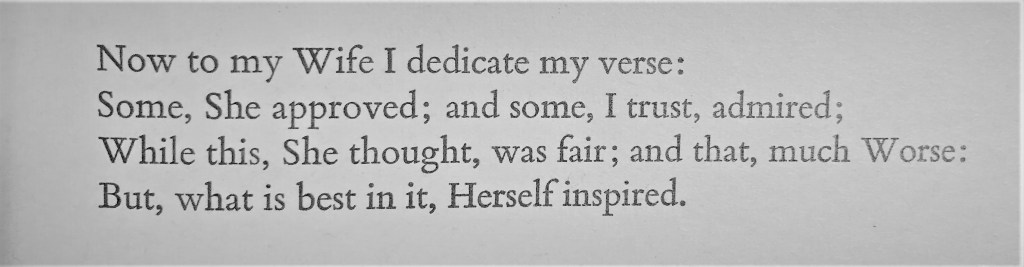
 John Brough’s Poems from the Sanskrit (1968) is one of those old Penguin Classics worth picking up in a second hand shop. I bought the book when I was an undergrad and enjoyed it immensely–and I had little idea that I would one day be reading Sanskrit in the original. Since then it has been a way for me to look back at the past, and to (re)turn to the originals of poems that I have not looked at in a long while. The translations are taken from across the spectrum of Sanskrit literature, but Brough’s emphasis is on “secular verses from Classical Sanskrit.” By this I suspect he meant something along the lines of, “poems that don’t have a clear religious theme (or that do not explicitly mention any divinities). The result is a vibrant anthology of poems, most of which were then unknown to readers without Sanskrit. For more background and extracts you can turn to this old but cool



 Claudio Sansone